
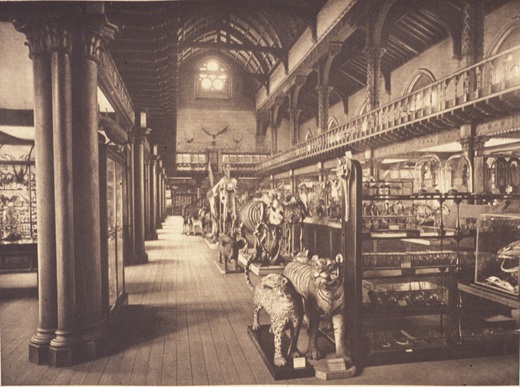
Ellen Fenton, Head of Audience Experience and Engagement, and Ruth Leach, Head of Projects and Exhibitions, reflect on scoping project challenges – from stakeholder buy-in through to adopting proactive, strategic development.
The Hunterian are mid-way through a scoping project that will help determine what its future might look like.
With funding from The National Lottery Heritage Fund, we’re currently identifying what we need to do to revitalise our ageing buildings on the University of Glasgow campus.

We’re asking how we can improve care of our important collections, and realise our ambition to be a place where communities are at the heart of our work.
So, what have we learned so far? What are the crucial first steps involved in a museum scoping project?
Where do you start? How do you define the purpose of your scoping project?
In some ways, a scoping project is no different to any other piece of work. You need to be clear on why you want to do it, why now, and what your objectives are. What are you trying to achieve by doing it?
Then, it’s a case of thinking about how to achieve the things you want to achieve.
Who needs to be involved in that planning?
We’ve learned the importance of involving wider partners – internal and external – earlier in the process. To do that you need to have solid and trusting relationships and networks. These can take time to build if they don’t already exist.

What does a ‘scoping project’ typically involve in a museum setting?
It’s hard to define a ‘typical’ scoping project. It depends on the context of the museum, what it’s trying to do, and what issues it is facing.
We’re working in spaces that weren’t designed for 21st century use. They often lack what visitors might be looking for from a museum experience today.
As is common across the sector, these older buildings have challenges around their conditions, energy consumption and how they operate.
We also need to consider a similar level of information-gathering around audience research and participant or community involvement.
The questions that The National Lottery Heritage Fund ask in their funding applications – around the impact on heritage, on people, and on sustainability – are really good ones to continually remind yourself of when undertaking this kind of work.

Does the nature of the museum or gallery influence your approach to scoping?
In some ways, absolutely – being a university museum definitely affects our approach to the scoping research. We are working within two or three different and overlapping circles of planning, funding and prioritisation.
There are a lot of things we’ve been able to do internally within the University, drawing on resources – people and expertise – that other museum organisations might not have access to.
We might have had to look elsewhere for that if we weren’t part of the University. That’s one of the obvious strengths of being part of a bigger establishment.
The other strength of the University set-up is in the funding and income model. Some cultural heritage organisations would struggle to do this work internally. They’ve got to focus more on keeping the doors open, and on their income generation.
We’re not in the same position. Putting the brakes on for some things – like our exhibition programme, for example – is an option for us. This won’t be the case for other organisations across the sector.
As a university museum, our offer goes beyond simply what it is we display. How we use and exhibit the collection is at the heart of what we do – whether that’s through teaching, learning or research activities. We can also be a ‘living lab’ for testing and developing new ideas, technologies and theories.
We’re also thinking very carefully about how our venues work for different audiences. We have a broad and rich collection, with millions of objects that can tell a whole host of stories.
Our starting point is what people want and need from their experiences in our venues or with our collections. From there, we look at creating the content and capturing the stories that help to shape those experiences.

What are some of the challenges you’ve faced with the scoping project?
The most obvious one is time!
How do you ensure your organisation prioritises this investigative work, alongside ‘business as usual’ activities?
For us, we’re still trying to build crucial initiatives – such as a repatriation programme, and a community engagement programme. This is all while delivering a high-quality contemporary arts programme too.
We’re trying to do all this ongoing work and overlay this massive piece of research and thinking work on top. It all comes down to prioritisation – and key to this is staff buy-in.
To achieve this, you have to try and invoke a sense of ownership of the project among colleagues. If it doesn’t feel core to what everyone’s doing, it won’t take priority over other things you’re trying to deliver.
When you’re involved in the scoping project at a leadership level, you’re naturally more invested in it. You tend to have a greater understanding of how everything fits together. You don’t separate the scoping work from the day-to-day activities – you can learn lots from the daily work. It can all contribute to the research.
Getting that across to colleagues and partners can be tricky though – particularly if their involvement is only required at particular stages of the scoping process.
Judging when and how to involve people is definitely a challenge: how soon is too soon, for example?
If it’s too early, you can leave people feeling a bit confused. If things haven’t had a chance to fully form, what you’re asking them to understand is still too abstract at that stage.
The flip side of that – leaving it too late to involve people – means you have a really developed concept, but you don’t always get the buy-in required from those you are working with.
Have you had to make any changes to your approach throughout the scoping project so far?
We haven’t had to make any massive changes as we’ve developed the project so far. It’s been more about refining our ideas around what all the different activities are that sit within the scoping process. We’ve done this as we’ve gone on, responding to what has emerged.
The broad picture of what we wanted to achieve was already there. However, when it came to actually implementing all those pieces of work, we’ve had to develop what some of that looks like and what it would entail.
That’s probably been one of the challenges too. We didn’t have it all down to that level of detail until we actually started.
What have been the key lessons learned so far?
A key learning for us has been around the staff training and upskilling in areas such as project management and evaluation. These are really important areas in terms of gaining that buy-in and instilling the ownership and preparedness for a project like this.
It really pays to do the skills analysis work as far in advance as you can. This is something we’ve learned retrospectively.
Establishing the level of upskilling needed while in the midst of the work can make commissioning and implementing training difficult. Give yourself plenty time in the run up to your project to get everyone up to the right confidence level.

In terms of getting started with our scoping project, there were a few key moments in The Hunterian’s recent history influencing our ongoing approach to the scoping exercise.
For a number of years we’ve been working with an evolving set of circumstances – from relocating our staff and collections store to Kelvin Hall, navigating new ways of working throughout the COVID-19 pandemic, to dealing with ongoing issues with our buildings.
These experiences have helped us think more strategically than previously, with a shift towards more proactive action.
Ultimately, the key takeaway is that successful scoping relies on clarity, collaboration, and a helping of courage along the way.
The challenge ahead lies in balancing our daily operations with extensive strategic planning.
The reward will be a detailed and forward-looking plan that will help define The Hunterian’s future for decades to come.
Read more about The Hunterian’s Scoping Project.
There are more brilliant blogs stretching right across our collection for you to explore – covering art, coins, medals and much more!
Keep an eye out for all the latest events at The Hunterian via our website – or subscribe to our e-news mailing list.
